
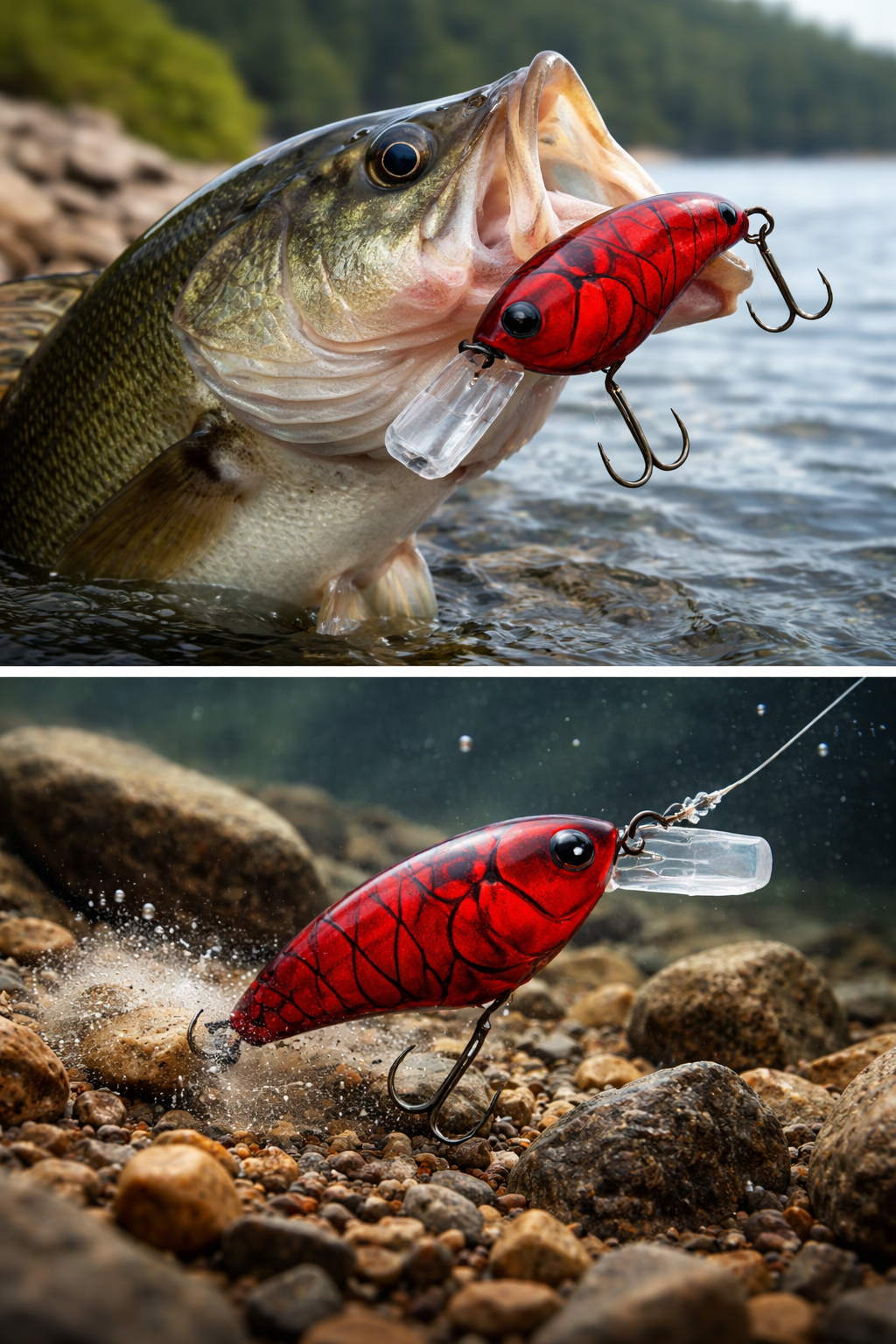
When and Why to Throw a Red Crankbait for Bass
If you’ve spent time around spring bass fishing, you’ve probably heard anglers talk about a “red crankbait bite.” The mistake most anglers make is thinking the color itself is the secret.
It’s not.
The real key is understanding when bass respond to it and where those fish are positioned.
Why Red Crankbaits Work
A red crankbait isn’t magic. It just matches what bass are focused on during certain seasonal windows.
In late winter and early spring, two things are happening at the same time:
- Crawfish become active
- Bass begin feeding more aggressively before the spawn
Many crawfish species carry orange, red, and rust tones, especially when they’re active in colder water. A red crankbait naturally imitates that profile.
But color alone doesn’t trigger bites.
Location and bottom contact are what make this bait effective.
Most red crankbait bites happen when the lure is:
- Deflecting off rock
- Hitting hard bottom
- Crawling through shallow cover
When the bait makes contact and changes direction, it looks like a crawfish reacting to pressure.
That’s the moment bass commit.
The Conditions That Set Up the Red Crankbait Bite
Anglers often hear “throw red in the spring.” That’s a little too simple.
The better way to think about it is conditions, not calendar dates.
The red crankbait bite usually appears when:
- Water temps are roughly 45–55°F
- Bass are moving from winter areas toward spawning zones
- Fish are feeding but still relating to bottom structure
Key areas to focus on:
- Rock banks
- Gravel flats
- Secondary points
- Hard-bottom transition areas
These spots naturally hold crawfish, which is why bass feed there during the pre-spawn movement.
The Right Depth Range
Most productive red crankbait fishing happens in shallow water.
That usually means:
- 2 to 8 feet deep
- Around rock, clay, or gravel
Squarebill and shallow-diving crankbaits tend to work best because they:
- Deflect well
- Stay in contact with cover
- Maintain bottom interaction
If your crankbait isn’t touching something occasionally, you’re probably not fishing it where bass expect crawfish to be.
Retrieval: Keep It Simple
A common mistake anglers make is overworking crankbaits.
You don’t need complicated retrieves here.
Start with a steady retrieve that keeps the bait contacting the bottom or cover. Let the crankbait do what it was designed to do.
A few small adjustments help trigger strikes:
- Pause briefly after hitting cover
- Speed up slightly after deflection
- Maintain bottom contact when possible
The bite usually happens immediately after the bait changes direction.
Why Many Anglers Struggle With Crankbaits
A lot of anglers give up on crankbaits because they assume they’re doing something wrong when the bait doesn’t work immediately.
The real issue is usually location and timing, not lure choice.
Many anglers cycle through multiple lures in a single day trying to force a bite, switching between jigs, spinnerbaits, and crankbaits without understanding where fish are actually positioned.
Once you understand where bass set up during seasonal movements, the lure choice becomes much easier.
Simple Rule for Red Crankbaits
If you want a practical way to remember when to throw one, use this rule:
Cold water + rock + moving fish = red crankbait opportunity.
It’s not the only bait that works during that time of year, but it’s one of the most reliable tools when bass are feeding on crawfish around shallow hard cover.
Focus on the conditions first.
The bait becomes obvious once you do.